
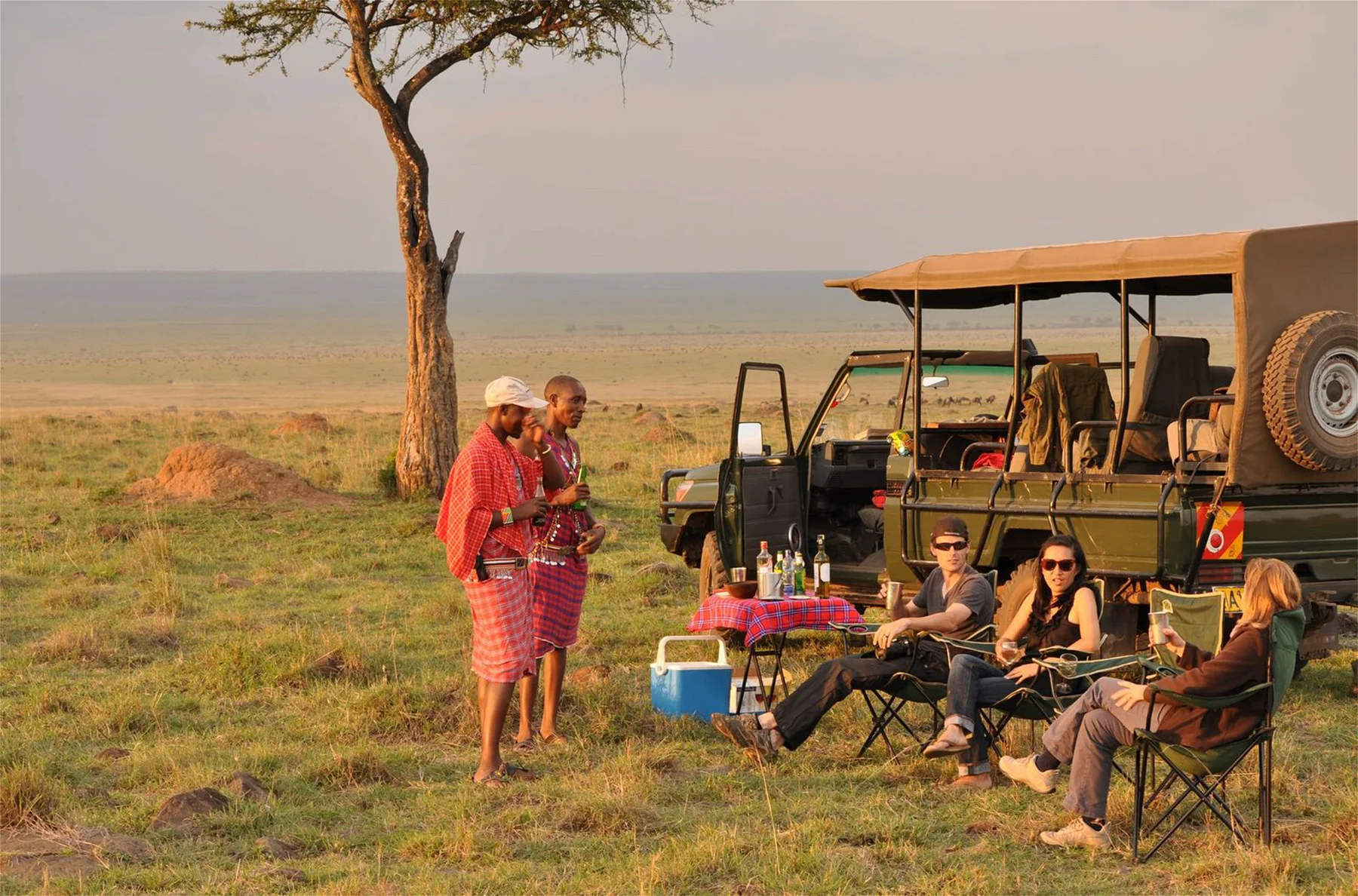
There’s a moment on every first safari that people remember for the rest of their lives. Maybe it’s a lioness lifting her head from the grass forty feet from your vehicle. Maybe it’s the low rumble of a million wildebeest hooves crossing the Mara River. Whatever the moment is, it tends to reorganize how a person thinks about travel — and often, about everything else too.
Kenya and Tanzania sit at the center of that experience. Together, they form the beating heart of East Africa’s wildlife country: the Maasai Mara, the Serengeti, the Ngorongoro Crater, and the wide, dust-gold plains that host the largest overland mammal migration left on Earth. If a safari is on your list — for a honeymoon, a family trip, a milestone birthday, or simply a long-held dream — this guide will walk you through what makes the region special, how to choose the right kind of trip, and what to actually plan for before you go.
Why East Africa Is a Bucket-List Destination
The Big Five, in Their Own Backyard
Lion, leopard, elephant, buffalo, and rhino earned the nickname “Big Five” from 19th-century hunters who considered them the most dangerous animals to track on foot. Today the term means something different: these are the animals most safari-goers hope to see, and East Africa’s parks offer some of the best odds on the continent. Kenya’s Maasai Mara and Tanzania’s Serengeti-Ngorongoro ecosystem are both reliable Big Five territories, especially with an experienced guide who knows current sighting patterns.
The Great Wildebeest Migration
No single wildlife event compares to the Great Migration. Roughly two million wildebeest, along with hundreds of thousands of zebras and gazelle, move in a continuous loop through the Serengeti and Maasai Mara ecosystems, following the rains and the fresh grass. The most dramatic chapter is the river crossing — herds plunging into the Mara or Grumeti rivers while crocodiles wait below. Timing your trip around this event takes some planning, since the herds move on a rough seasonal pattern rather than a fixed calendar, but it’s the single biggest reason repeat travelers keep coming back to this region.
Landscapes That Don’t Repeat Themselves
Part of what makes an East Africa safari so memorable is the sheer variety packed into a relatively small area. Within a single trip, you can move from the flat savannah of the Mara to the collapsed volcanic caldera of the Ngorongoro Crater, from the soda lakes of the Rift Valley to the white-sand beaches of Zanzibar. Few destinations offer that range of scenery without days of travel in between.
Conservation You Can See in Action
Kenya and Tanzania have both leaned heavily into community- and conservancy-based tourism models over the past two decades. Many of the private conservancies bordering the national parks — particularly around the Maasai Mara — funnel tourism revenue directly into land leases with Maasai landowners, funding anti-poaching patrols and reducing human-wildlife conflict. Choosing operators and camps that support these models is one of the more meaningful ways travelers can contribute to conservation simply by booking a trip.
Culture Alongside Wildlife
A safari here isn’t only about animals. Maasai and Samburu communities live alongside these ecosystems, and many camps and conservancies now offer respectful, community-led cultural visits — from beadwork demonstrations to walking safaris led by Maasai guides. These experiences add context to the wildlife you’re seeing and put money directly into local economies.
How to Choose the Right Safari Experience
Not all safaris look the same, and the right structure depends on your budget, travel style, and who’s coming with you.
Budget safaris typically use shared group vehicles, public campsites or simple lodges, and set group itineraries. They’re a smart entry point for travelers who want the wildlife experience without the luxury price tag.
Mid-range safaris strike a balance — comfortable tented camps or lodges, smaller group sizes, and more flexibility in the itinerary, usually at a more moderate cost than top-tier luxury properties.
Luxury safaris mean private guides, boutique or high-end lodges, gourmet dining, and often extras like hot-air balloon rides or bush dinners. These trips prioritize comfort and exclusivity alongside the wildlife.
Private safaris put you and your group alone in a vehicle with a dedicated guide, which means total flexibility on pace, route, and how long you linger at a sighting.
Family safaris work best with operators who plan around kids specifically — shorter drive times, family-friendly camps, and guides skilled at keeping younger travelers engaged.
Honeymoon safaris usually combine a few days of wildlife viewing with a beach add-on, often in Zanzibar, plus private and romantic touches like secluded dinners or adults-only lodges.
The best approach is matching the safari style to your actual travel priorities rather than picking based on price alone. A well-planned mid-range trip with a great guide often beats an unfocused luxury itinerary.
What Makes a Great Safari Company?
Since so much of a safari’s success comes down to logistics you can’t see from a brochure, it’s worth knowing what separates a strong operator from a mediocre one:
- Experienced local guides who know animal behavior, current migration positioning, and how to read a landscape — not just how to drive between checkpoints.
- Safety-first operations, including well-maintained vehicles, clear emergency protocols, and guides trained in first aid.
- Tailor-made itineraries built around your interests, timeline, and budget rather than a rigid, one-size-fits-all package.
- Transparent pricing with no hidden park fees, conservancy charges, or last-minute add-ons.
- Responsive customer support before, during, and after the trip — safaris involve a lot of moving parts, and good communication matters.
- Ethical tourism practices, including responsible wildlife viewing distances and genuine support for conservation and local communities.
Operators that check these boxes tend to share a few traits: they’re specialists in a specific region rather than generalists trying to cover the whole continent, and they employ guides who’ve spent years — often a lifetime — in the areas they drive. Mara Nova Safaris is one such example, focusing specifically on Kenya and Tanzania rather than spreading thin across the continent. That regional focus tends to translate into sharper local knowledge, stronger relationships with conservancies and camps, and itineraries that are built around where the wildlife actually is that season rather than a fixed template.
Featured Destinations
Maasai Mara National Reserve (Kenya) — The single most famous safari destination in Kenya, known for dense predator populations and, from roughly July through October, dramatic river crossings during the Great Migration.
Serengeti National Park (Tanzania) — Vast, endless plains that give the park its name (from the Maasai word for “endless plains”). Home to the migration for most of the year and consistently strong Big Five sightings.
Amboseli National Park (Kenya) — Famous for large elephant herds photographed against the backdrop of Mount Kilimanjaro on clear mornings.
Ngorongoro Crater (Tanzania) — A collapsed volcanic caldera with an extraordinarily dense concentration of wildlife in a compact area, including one of Africa’s better chances of spotting black rhino.
Lake Nakuru National Park (Kenya) — A Rift Valley lake known historically for enormous flamingo flocks, and today a strong rhino sanctuary as well.
Zanzibar (Tanzania) — The classic “safari and beach” pairing — white sand, turquoise water, and Stone Town’s UNESCO-listed old quarter, usually tacked onto the end of a mainland safari.
Safari Planning Tips
Best time to visit: The dry seasons (roughly June–October and January–February) generally offer the easiest wildlife viewing, since animals cluster around limited water sources. If witnessing a river crossing is the priority, aim for July through October in the Mara, though exact timing shifts year to year with rainfall.
Packing essentials: Neutral-colored clothing, layers for cold early-morning game drives, a wide-brim hat, sunscreen, binoculars, and a dust-resistant bag for camera gear.
Budget planning: Factor in park entry fees, conservancy fees, visas, tips for guides and camp staff, and any international flights separately from your land package cost — these can add up meaningfully.
Booking timelines: For peak migration season or popular luxury camps, book 6–12 months ahead. Shoulder-season or budget trips can often be arranged with more flexibility.
Photography tips: Bring a zoom lens (200mm or longer if possible), extra batteries and memory cards, and ask your guide about the best light windows — early morning and late afternoon consistently produce the richest color and animal activity.
Wildlife etiquette: Keep a respectful distance, never ask a guide to approach an animal unsafely for a better photo, and always follow your camp’s guidance around walking after dark.
About Mara Nova Safaris
Among the operators specializing in this part of the world, Mara Nova Safaris has built its business around Kenya and Tanzania specifically — rather than trying to be a generalist across the whole continent. That focus shows up in the details: itineraries built around where wildlife is actually concentrated that season, guides who know the conservancies and parks well beyond the standard tourist routes, and a planning process that leans toward tailor-made trips rather than fixed packages.
Whether the goal is a first-time budget-conscious safari, a family trip designed around younger travelers, or a private luxury honeymoon combining the Mara with a few days in Zanzibar, the company positions itself around building an itinerary suited to the traveler rather than fitting the traveler into a pre-set mold. For travelers weighing safari operators, that kind of regional specialization — paired with transparent planning and a focus on responsible tourism — is generally a good sign to look for, regardless of which company you ultimately choose.
Final Thoughts
A Kenya and Tanzania safari isn’t just a trip — it’s one of the few travel experiences that can genuinely shift how you see the natural world. Whether you’re drawn by the drama of the Great Migration, the density of wildlife in the Ngorongoro Crater, or simply the idea of watching elephants move across the plains at sunrise, this region rewards careful planning with unforgettable moments.
Start by deciding what kind of safari experience fits your travel style and budget, then look for an operator whose expertise matches the trip you want to take. Specialists who know Kenya and Tanzania in depth — among them, companies like Mara Nova Safaris — tend to turn a good safari into an extraordinary one.